Like Button..!!!

Friday, August 10, 2012

Brahmam Garu


Other Names and Nicknames: 
Sri Sri Sri Pothuluri Veerabrahmendra Swamy, Veeraiah Veeram Botlaiah, Brahmam Garu
Function: 
Avatar
Traditions: 
Brahmam_garu.jpgHinduism, Guru Sishya Upamanam, Bhavishyadarshanam
Main Countries of Activity: 
India
Date of Birth: 
17th century
Place of Birth: 
Banaganapalli area, Kurnool Dist, Andhra Pradesh, India
In His/Her Body ("alive"): 
No
Date Left His/Her Body: 
17th century


Pothuluri Veerabrahmendra was born according to the legend in the 17th century (other version is between 1500-1510 A.D.) in a small village near Banaganapalli, Kurnool Dist, Andhra Pradesh, India.


He travelled over the subcontinent and teached about hindu culture. He strongly opposed the brahmans who did not allow others into their villages called "Agraharams" and oppossed untouchability. Once when he was passing near an Agraharam, brahmins stopped him and did not allow him to go into the agraharam. Then according to the legend, The whole village was set on fire. The Brahmins realized his power and welcomed Brahmam garu into the agraharam.


He always said that all human beings and all living beings are one and all are God's family.
It is said that he pridicted the future upto destruction of the world in his book Kalagnanam (Knowledge about Future).


Hyderabad navab that time was invited Brahmam garu to his house and he belived that he is intelectual but he dont believe that he is powerful and GOD in nature. he wanted to test Guruji and Asked to get some water in small pramidas and asked brahmam garu to enlighten the lamps with water. then Brahmam Garu enlighntend the lights with water. then the Navab realized the power of Brahmam garu became disiple of Veerabrahmam garu.


He predicted about hyderabad Musi rever floods and told to navab also.He predicted about indian political, financial, spiritual, social and all aspects in his kalagnanam and he also predicted about british custody of india and freedom fightings and also told about mahathma gandhi. he told about the system of birth, how athma comes in to the fathers body and later into mothers body , how baby develops and gets knowledge inside mother.


He teached about Chakras, Mudras, Yoga,Dhyana, Bhakthi he Wrote 14000 pages of Kalagnanam by sitting underground in a cave near Ravvalakonda at Banaganapall.
he also told that he will come back at the time end of the world with the name of Veerabhogavasantharayalu and save the sinless people. he gone into Jeevasamadhi at kandimallayapallem now known as Brahmamgari matam at Kadapa dist in Andhra Pradesh. His temple also there at Brahmagari matam and nithya aradhana will happened over there..


He is the author of Kalagnanam, a text in Telugu that predicts the arrival of Kalki in the form of Sri Veerabhoga Vasantarayalu. A fifteen year old, came to the Ashram to become a disciple of Veera Brahmendra Swami. He named the boy Siddhayya who turned out to be the most loyal and devoted of his disciples. Siddhayya is none other than Ananda Bhairava and in accepting him as disciple Sri Brahmendra Swami was fulfilling a boon he granted earlier. Brahmendra Swami gave Sidddayya initiation into many spiritual practices including Taraka Yoga.
He wrote 'Kalagnanam', collections of prophecies on palm leaves. Most of his predictions came true and many are yet to happen. Also known as Indian Nostradamous by west, he said he will come again to this earth as 'Veera Bhoga Vasantharayalu' and that would mean the end of life on earth. He prophesized that before his arrival the world would be in a very chaotic condition. Swami left his body with his self imposed 'Sajeeva Samadhi'. He went into Samādhi when he was still alive and asked to close the stone above. 

Sunday, August 5, 2012

Swami Brahmananda Saraswati


Brahmananda Saraswati.jpg
Other Names and Nicknames: 
Guru Dev, Shankaracharya of Jyotir Math, Swami Brahmananda Saraswati Jagadguru Bhagwan Shankaracharya of Jyotir Math
Function: 
Guru
Traditions: 
Vedanta
Main Countries of Activity: 
India
Date of Birth: 
1871
Place of Birth: 
Gana, Uttar Pradesh, India
In His/Her Body ("alive"): 
No
Date Left His/Her Body: 
1953
Brahmananda Saraswati (1871 - 1953) a Hindu Guru who was born into a Brahmin family in the village of Gana, near Ayodhya in Uttar Pradesh, India. At the age of nine he left home to wander and follow a spiritual path of renunciation. At the age of 14 he found his master, Dandi Swami Krishnanand Saraswati, in Uttar Kashi. Later, following his master's instructions, he retired to a cave, resolving not to emerge until he had attained enlightenment. In 1904 he was initiated into the order of "Sannyas" by his Master at the Kumbh Mela.In 1941, after decades of meditation and maintaining silence, Swami Brahmananda Saraswati finally accepted repeated requests to become the Shankaracharya (spiritual head) of Jyotirmath, a position that had been vacant for about 150 years.
The Adi Shankara (c. 8th century CE), the great reviver of Vedic Sanatana Dharma, had four principal followers, Padma-Pada, Hasta-Malaka, Vartika-Kara and Trotaka who each established a monastery in the north, south, east and west of India. Jyotirmath is the northern monastery.
Swami Brahmananda Saraswati was the guru of Maharishi Mahesh Yogi, who became his devotee shortly before his installation and later became his personal assistant. The Maharishi's devotees respect and revere "Guru Dev" as their Paramguru. Maharishi Mahesh Yogi stated that he was merely a conduit for the grace of his Guru. It is the blessings of Guru Dev that are invoked during the TM Puja initiation ceremony, that each TM practitioner experiences.


Gayatri Mantra


AUM BHOOR BHUWAH SWAHA,
TAT SAVITUR VARENYAM
BHARGO DEVASAYA DHEEMAHI
DHIYO YO NAHA PRACHODAYAT.


Summary of the Gayatri Mantra


Gayatri Mantra (the mother of the vedas), the foremost mantra in hinduism and hindu beliefs, inspires wisdom. Its meaning is that "May the Almighty God illuminate our intellect to lead us along the righteous path". The mantra is also a prayer to the "giver of light and life" - the sun (savitur).


Oh God! Thou art the Giver of Life,
Remover of pain and sorrow,
The Bestower of happiness,
Oh! Creator of the Universe,
May we receive thy supreme sin-destroying light,
May Thou guide our intellect in the right direction.


Gayatri, the five-faced Goddess, is said to have domain over the five senses or pranas, and protects these five life-forces of those who chant the Gayatri Mantra. In her role as the protector, Gayatri is referred to as Savitri.


Word for Word Meaning of the Gayatri Mantra


Aum = Brahma ;bhoor = embodiment of vital spiritual energy(pran) ;bhuwah = destroyer of sufferings ;swaha = embodiment of happiness ;tat = that ;savitur = bright like sun ;varenyam = best choicest ;bhargo = destroyer of sins ;devasya = divine ;these first nine words describe the glory of Goddheemahi = may imbibe ; pertains to meditationdhiyo = intellect ;yo = who ;naha = our ;prachodayat = may inspire!"dhiyo yo na prachodayat" is a prayer to God


Hence the Gayatri is unique in that it embodies the three concepts of stotra (singing the praise and glory of God), dhyaana (meditation) and praarthana (prayer).


The prayer form of the Gayatri be used to pray to Lord Shiva is called Rudra Gayatri. Similarly, one may sing Ganesha Gayatri for Lord Ganesha, Hanuman Gayatri for Lord Hanuman, and Saraswati Gayatri for Goddess Saraswati.


Origin, Benefits and Chanting of the Gayatri Mantra


The Vedas are widely considered to be the source of all true knowledge, the word "Veda" itself meaning "Knowledge". Gayatri Devi also gave to mankind the "Gayatri Mantra", also known as the "Guru Mantra" or the "Savitri Mantra". It is one of the oldest mantras, and generally thought of as being amongst the highest and most powerful mantras of all. This mantra is therefore often referred to as "the Mother of the Vedas". In the Bhagavad Gita, Lord Krishna had proclaimed to Arjuna - "Among all the mantras, I am the Gayatri".


Rishis selected the words of the Gayatri Mantra and arranged them so that they not only convey meaning but also create specific power of righteous wisdom through their utterance. The ideal times for chanting the mantra are three times a day - at dawn, mid-day, and at dusk. These times are known as the three sandhyas - morning, mid-day and evening. The maximum benefit of chanting the mantra is said to be obtained by chanting it 108 times. However, one may chant it for 3, 9, or 18 times when pressed for time. The syllables of the mantra are said to positively affect all the chakras or energy centres in the human body - hence, proper pronunciation and enunciation are very important.


Chanting of Gayatri Mantra removes all obstacles in our path to increased wisdom and spiritual growth and development. The teachings and powers incorporated in the Gayatri Mantra fulfill this purpose. Righteous wisdom starts emerging soon after Jap(recitation) of the Gayatri Mantra is performed. Sathya Sai Baba teaches that the Gayatri Mantra "will protect you from harm wherever you are, make your intellect shine, improve your power of speech, and dispel the darkness of ignorance (Dhiyoyonah prachodayaath)".


Gayatri Mantra - Mantra or Prayer?


The Gayatri Mantra occupies a unique place in that it has both the power of mantra and of prarthana (prayer). It is important then in considering the Gayatri Mantra to distinguish the difference between these two deceptively similar words.


A mantra may be articulate or inarticulate, or a combination of them, as with AUM. It has an inherent power, known as "Mantra shakti", which has a positive influence not due to any philosophical meaning behind the mantra, but simply due to its utterance alone.


A prayer on the other hand does have a philosophical meaning behind it, and it is generally through this meaning that the prayer or prarthana has its power. Since this meaning can be easily understood, the method of prarthana is generally the form of worship used by most people.


The Gayatri, or Guru Mantra possesses both the power of mantra and the power of prarthana, and thus has both an intrinsic power (ie "mantra shakti"), through its mere utterance alone, and also an instrumental power (ie "prarthana shakti"), which is derived from the understanding of its meaning and philosophical significance. Hence, the repeated and correct chanting of the Gayatri Mantra, with proper understanding of its meaning, is believed to be of the greatest good to the individual.


Thursday, December 22, 2011

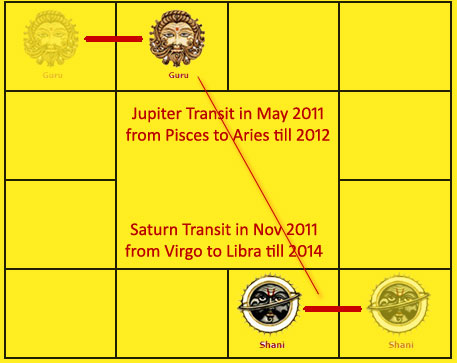
Topic of Today:- சனி பெயர்ச்சி பலன்கள் 2011-2012

 
இன்று சனி பெயர்ச்சி...கன்னி ராசியிலிருந்து சனி பகவான் துலாமிற்கு இடம் பெயர்கிறார். உங்கள் ராசிற்கு இந்த சனி பெயர்ச்சி மாற்றம் எப்படி இருக்கும் என்பதைப் படித்துப் பாருங்கள்..!!!!

http://posts.fanbox.com/df1d4
 

(மேஷ ராசி)

http://posts.fanbox.com/cg1d4
 

(ரிஷிப ராசி)

http://posts.fanbox.com/ng1d4
 

(மிதுனம்)

http://posts.fanbox.com/wg1d4
 

(கடகம்)

http://posts.fanbox.com/3h1d4
 

(சிம்மம்)

http://posts.fanbox.com/8h1d4
 

(கன்னி)

http://posts.fanbox.com/gh1d4
 

(துலாம் ராசி)

http://posts.fanbox.com/th1d4
 

(விருச்சிகம்)

http://posts.fanbox.com/zh1d4
 

(தனுசு)

http://posts.fanbox.com/8j1d4
 

(மகரம்)

http://posts.fanbox.com/gj1d4
 

(கும்பம்)

http://posts.fanbox.com/jj1d4
 

(மீனம்)

Topic of Today : Have faith in your guru

Have faith in your guru

Sri Sakthi Amma
             (Have faith in your guru)

Guru or a teacher is essential for every individual. There is an element of ignorance in every individual and, whilst we all perform many activities in our lives, many of the things we do could be considered wrong and could cause us to lose the opportunity of living a good life.


 A guru can be our teacher, can remove this ignorance and can also bring in the light, that is wisdom.
 
Navigate your way
For example, if we want to visit a new city, what would we do? First, we would ask around to find people who have already been there. We would talk to them. We would check the route, perhaps look for shortcuts or consider different ways of getting there. We would make inquiries about the location itself. Finally, we might even talk to a travel agent. In order to arrive at the proper destination, we would check out all these small details, even if a package deal is offered!
Similarly, if we want to live a life of joy (the new way), we need to know the proper path. But who is a suitable teacher? Since we are all searching for different things in life, we will all be taught by different gurus. Different gurus will have to teach us what we need to know and show us the path to attain our goals. It will not be the same person for us all, but it will be someone who can show us the way.

A guru is not someone who will teach you only about a particular religion or who works for a particular religion. A guru is a person who shows humanity the right way of living life. A guru shows an individual the path of wisdom and love.
 
Careful selection
How does one select a guru? First, there has to be an element of trust, but not trust gained through testing the guru. If we think we can test a guru, we assume that we are capable of authenticating the particular individual as a guru. If this were so, we would not need a guru for we would then ostensibly have the very knowledge that we presumably sought in a guru.
Look for a guru who does not preach about a particular religion, as such teachings apply only to a small section of people. A guru is one whose teachings are meant for all of humanity, irrespective of religion. Gurus don't go around asking people to choose them. It's the individual's choice and decision as to whether someone will be their guru. It is through this choice and through faith that one will acquire knowledge and learn how to live the right way. The decision should come from within.
Once we have selected a guru, it is essential that we put trust and faith in the guru in order to receive the right knowledge. With your affinity to your guru, create a bond. You must surrender to your guru, in order to shed ignorance and learn the right way of living. Moreover, if the students do not have faith and trust in their guru, then, at times, the guru could be misunderstood.


Patience, faith, surrender
Only if we are patient will we fully understand the teachings of the guru. Patience is needed, not just in this respect, but also in all other areas of life. Only through faith and patience will we receive the opportunity to learn, to gain understanding, and to attain peace in life. The other point that needs to be stressed is that we could cause huge problems for our guru if we don't have faith in him, especially if we don't understand him.
Life itself is a pathway of faith. It is only possible to lead a complete life if one has a guru and places implicit faith in him. Surrender is also a necessity.


Tuesday, September 6, 2011

Mahan Of The Day:- Surdas

Surdas


Surdas
About Surdas
Surdas is one of the people who had great influence on the cultural heritage of India. He was a poet, a saint and a musician and played all the parts with the same finesse. Since there are no authentic records on the life of Surdas, his biography comes up as a combination of facts and fiction.

Early Life
There is a little disagreement regarding the exact birth date of Surdas, some scholars believe it to be 1478 AD, while others believe it to be 1479 AD. Same is the case of the year of his death, it is either considered to be 1581 AD or 1584 AD. As per the limited authentic life history of Surdas, it is said that he lived in Braj, near Mathura. Surdas was born blind and because of this, he was neglected by his family. As a result, he left his home at tender age of six.

Meeting Shri Vallabharacharya
In the eighteenth year of his life, Surdas went to Gau Ghat, a sacred bathing spot on the embankments of Yamuna River. It was here that he came across Shri Vallabharacharya, the great saint-savant. Vallabharacharya advised Surdas to sing Bhagvat Lila, the Creative Play of the Lord and introduced him to the secrets of contemplative devotion. From this time onwards, Surdas never looked back on the path of spirituality. Surdas spent the last years of his life in Braj, the place of his birth.

Literary Works of Surdas
The work of Surdas mainly consists of the following three compilations.

Sur-Saravali
Sur-Saravali, based on the festival of Holi, originally consisted of hundred verses. In this poem, he tried to create a theory of Genesis, with Lord Krishna as the Creator.

Sahitya-Lahiri
Sahitya-Lahiri is mainly associated with Bhakti (devotion) towards the Supreme Lord.

Sur-Sagar
Sur-Sagar is considered to be the magnum opus of Surdas. The poem has been woven around the life of Lord Krishna. It originally contained 100,000 poems or songs, out of which only 8000 have survived the travails of time.

Philosophy of Surdas
The Bhakti movement that was widely prevalent in India at the time of Surdas deeply affected him. He propagated the Shuddhadvaita school of Vaishnavism. It makes use of the spiritual metaphor of the Radha-Krishna Lila, derived from earlier saints.
 
________________________________________________________________________________
During the reign of Akbar, a great saint, Surdas, was born. He was blind and was beyond the parochial religious beliefs. His loving description of Krishna’s life in a folk language, known as Brajbhasa, is still today a treasure of Krishna’s bhajans.
In the village of Sihi near Delhi, in the house of a poor Brahman, a child was born in the year 1478. He was born blind. He had three other brothers. He was so neglected by his neighbors and his own family that by the time he was three, everyone forgot his real name and he was called Sur, which means blind. He was later known as Surdas.
Surdas would often go hungry because his mother would not bother to feed him. His brothers would receive new clothes at Diwali time but not Surdas. Surdas' parents thought he wouldn't be able to tell the difference anyway. It hurt his feelings.

Surdas' outside world was not very kind either. His playmates enjoyed teasing him and when he came to his mother for sympathy, she scolded him for going out. So, unfortunate Surdas stayed on the porch most of the time.
One day, a group of singers passed by his house singing in praise of the Lord. Swept up by the joy the music brought forth in him, he forgot for a moment that he was blind.
"One day I will learn how to sing," he told himself.
When Surdas joined his brothers to learn from their father how to read and write, his father said, "Go away. You are blind, you cannot read." His brothers teased him as he sat and wept.
A few days later, another group of singers came by, passing through the village, begging for alms and singing in praise of the Lord. They passed by Surdas' house. Surdas followed them. At night they stopped to cook and rest near a lake. One of them came to Surdas and asked, "Why are you following us?"
"I would like to learn to sing" answered Surdas.

They fed him that night but didn't want to be burdened with the blind boy. In the morning they left without telling him.
Where could blind Surdas go? He sat under a tree and began singing the Lord’s praise. He had a good voice and his feelings were expressed with utmost sincerity. Villagers passing by gave him food and he survived. The lake was a popular resting spot for those travelling to Mathura and Vrindavan. From their conversation, Surdas learnt a lot about the outside world.
By the age of fourteen, Surdas developed a keen sixth sense and could predict many things. People were amazed and he was called "miracle boy." If a villager lost an animal, Surdas could tell him where to find it. He was cosulted on the appropriate day to travel or to start any project. People from other villages travelled a long way to meet him and gave their offerings. One day, the landlord's little toddler wandered off and could not be found. Surdas predicted where the boy was and the boy was found. The landlord was so pleased that he fell at Surdas' feet and asked his men to build a cottage for him near the tree under which Surdas stayed. Shortly thereafter, people offered him a string instrument to accompany his singing. Some people became his disciples. They began to write the songs he composed. The disciples loved him and served him to the best of their ability.
One night, Surdas dreamt of Krishna and people praising Him through bhajans. Surdas woke up and was convinced that Krishna was calling to him. The next morning, he departed for Vrindavan. His disciples came running and were worried.
"Why are you leaving us? Are we at fault?"
Surdas consoled them and continued on his way to Vrindavan through the jungle. Wherever he went people wanted to listen to him sing and have him stay with them. They would beg him to stay in their village. They respected him, honored him and fed him. But Surdas kept moving.

"I am a traveling monk, I cannot stay at any one place," Surdas said.
One day, while he was resting at the edge of a shallow abandoned well, he fell into the well. Blind and injured, he did not know how to get out.
Surdas stayed in the well for seven days praying for help. Suddenly he heard a child’s voice, "Hold my hands, I will take you out."
Surdas came out of the well and the boy disappeared. He kept searching for the little boy who rescued him. In his imagination, the boy was none else but Gopal Krishna (Krishna's childhood name). People thought he was crazy.
One day one of his disciples told Surdas that the great learned saint Swami Balabhachari was going to visit Vrindavan. Balabhachari was famous for his writings about Krishna. Surdas keenly wished to see him. While Surdas was making arrangements to cross the river to visit Balabhachari, Balabhachari himself arrived at Surdas’s residence. Surdas was overwhelmed with joy. He fell at Balabhachari's feet and sought his blessing. Upon his request, Surdas sang a bhajan about Krishna. Balabhachari requested Surdas to dedicate his life to the praise of Lord Krishna.
Balabhachari stayed with Surdas for a few days and taught him about Krishna's scriptures. Then he initiated Surdas to his own religious order. Surdas went to Vrindavan with his guru, Balabhachari. Balabhachari appointed Surdas as the chief singer of Srinath temple in Govardhan, near Vrindavan. Srinath is another name for Krishna.

Surdas’ reputation as a singer and devotee spread far and wide. One day in the court of the mogul emperor Akbar, the court singer Tansen, sang one of Surdas' songs. Akbar was charmed. Tansen admitted that the tune and the lyrics were that of Surdas, the blind devotee of Krishna.
Akbar was a broadminded Muslim. He invited Surdas to his court. Surdas declined saying, "I am so very honored, but I sing only in the court of my beloved Krishna."
When Akbar heard of this, he gladly came to Surdas and listened to his prayer songs in the temple. He was very pleased and asked Surdas to ask for anything he wanted.
Surdas said, "Just do not ask me to go to your court to sing." Akbar agreed.
Surdas lived a long life and wrote many songs in praise of Krishna's childhood days. Surdas' songs are sung to this day.


Thursday, September 1, 2011

Mahan Of The Day:- Gopal Krishna Goswami Maharaja


Religion Gaudiya Vaishnavism, Hinduism
Other name(s) Gopal Krishna Khanna
Personal
Born August 14, 1944
New Delhi, British Raj
Religious career
Initiation Diksa–1969, Sannyasa–1981


Appearance

His Holiness Gopal Krishna Goswami Maharaja appeared on this planet on the most auspicious day of Annada Ekadashi, on August 14, 1944, in New Delhi, India. Having named as Gopal Krishna at the time of his appearance, his spiritual master had not changed his name at the time of harinama initiation.

H. H. Gopal Krishna Goswami Maharaja after graduating from the University of Delhi, studied Business Management at the Sorbonne University of Paris on a scholarship from the French Government and later, obtained a Masters Degree in Business Administration from the McGill University at Montreal.

Meeting with His Spiritual Preceptor - His Divine Grace A C Bhaktivedanata Swami, Srila Prabhupada

Having received an intimation from His grace Mahapurusa das, the than President, ISKCON, Montreal that His Divine Grace A.C. Bhaktivedanta Swami, Srila Prabhupada, Founder Acaraya, ISKCON shall be arriving in Montreal on June 1, 1968, H. H. Gopal Krishna Goswami Maharaja arrived there on 30th May. After the kirtana, H. H. Gopal Krishna Goswami Maharaja enquired if he could render some service, and he was immediately sent to clean Srila Prabhupada's apartment.

"I was fortunate to receive this as my first assignment in devotional service", Maharaja said. He cleaned the doors, shelves and windows of Srila Prabhupada's apartment. In this way, Gopal Krishna’s service attitude for Srila Prabhupada was manifested even before he actually met him.

H. H. Gopal Krishna Goswami Maharaja first met Srila Prabhupada in the evening of June 1st, 1968. Within the first two weeks of meeting Srila Prabhupada, he decided that he would accept him as his spiritual master. In the words of H. H. Gopal Krishna Goswami Maharaja, "When I first met Srila Prabhupada, the motivation to surrender to God was already there in me, and two weeks after meeting him, I knew that Lord Krishna wanted me to surrender to Srila Prabhupada".

In fact, around December 1967, H. H. Gopal Krishna Goswami Maharaja had started visiting many Hindu temples, gurudwaras and churches, in his search for the Absolute Truth or God. Every Sunday, he would seek out a different church, temple or gurudwara, and would spend the whole day there.

Establishment of Guru-Shisya sambandha

Srila Prabhupada was always sympathetic and extra-merciful to Indians, but of all the Indians who came to hear him, young Gopal Krishna was very special. While all the other Indians would offer obeisances and sit for a few minutes, H. H. Gopal Krishna Goswami Maharaja was the only Indian who would come regularly and sit right till the end of the lecture.

During the three month period that Srila Prabhupada stayed and lectured in Montreal, H. H. Gopal Krishna Goswami Maharaja spoke, "Of course, I did not know the importance of hearing at that time, but my only small qualification was that I was very respectful to Srila Prabhupada from the first day I saw him, and I would stay for his lectures till the end, and leave only after he had left the temple".

Around that time, he was working for Pepsi-Cola, doing Marketing Research. Srila Prabhupada started taking great personal interest in him, and would talk to him almost every day. Since then, both of them started a regular correspondence, with Srila Prabhupada writing as many as three long letters every month. Thus, a very intimate guru-shisya relationship had already begun to establish.

On May 27th, 1969, Srila Prabhupada wrote to say, "As your name is already Gopal Krishna, there is no need for changing it. You will now be known as Gopal Krishna das." H.H. Gopal Krishna Goswami Maharaja was only 25 years old then!

Later on, H.H. Gopal Krishna Goswami Maharaja moved into the temple and engaged himself fully in the service of Srila Prabhupada. For many years, he acted as Srila Prabhupada’s personal secretary.
In 1975, Srila Prabhupada sent H.H. Gopal Krishna Goswami to India. Srila Prabhupada made him the General Body Commissioner (GBC) of entire India from 1975 to 1976. Srila Prabhupada specifically instructed him to print and expand book-distribution in India. Also, Srila Prabhupada entrusted H.H. Gopal Krishna Goswami Maharaja to oversee various important projects, such as Vrindavana, Hyderabad, Mayapur and Mumbai, recognizing his dedicated service and mood of sincere surrender.

"Srila Prabhupada was anxious that book-printing in India should expand", says H. H. Gopal Krishna Goswami Maharaja. "During my first two years, he would press me again and again to print more and more books." H.H. Gopal Krishna Goswami Maharaja said, "that Srila Prabhupada was especially pleased when he presented him copies of the First Canto of Srimad-Bhagavatam in Hindi".

Srila Prabhupada encouraged him to utilize his talents for selling his books as widely as possible. "Now you can utilize your knowledge of marketing for Krishna's service, idam hi pumas tapasya srntasya va, svistasya suktasya ca buddhi dattayo. This is the perfection of education."

In 1976, Srila Prabhupada appointed H. H. Gopal Krishna Goswami Maharaja as G.B.C. for Russia. He made several trips to Soviet Union, a communist state (now called the Commonwealth of Independent States) and risking grave dangers, he preached and distributed books over there. On the instruction of Srila Prabhupada, he took part in the International Book Fair, waging a virtual war against maya.

Srila Prabhupada’s instructions being his life and soul, empowered his vision, and amazing feats began to manifest. After the fall of the communist regime in Soviet Union, and the freedom granted to religious expression, he helped to establish many centers in the erstwhile Soviet Union.

Acceptance of Sannyasa Order

In 1981, H. H. Gopal Krishna Goswami Maharaja took the sannyasa order. A year later, in March 1982, on the auspicious day of Gaura-Purnima, H. H. Gopal Krishna Goswami Maharaja became a ‘diksha’ guru (an initiating spiritual master).

Spiritual Messenger of Lord Caitanya

H. H. Gopal Krishna Goswami Maharaja being an empowered representative of Lord Sri Caitanya, is engaged tirelessly in distributing Lord Gauranga’s mercy, and is one of the important spiritual preceptor who is fully devoted to fulfilling Lord Gauranga’s prophecy that "My name will be chanted in every village and town of the world".

Distributing the holy name to conditioned souls, preaching in unfavorable environment and risky places, perfect management of the Society, and demonstrating exemplary behavior in practicing devotional service is unchecked! H. H. Gopal Krishna Goswami Maharaja is taking on a lot of responsibility personally, of delivering conditioned souls world-wide.

At present, H. H. Gopal Krishna Goswami Maharaja is the G.B.C. for Mumbai, Northern India (that includes New Delhi, Haryana, Punjab, Uttar Pradesh, Vrindavana, Chandigarh), Mayapur, Kenya, Canada, some states of America, and many parts of the Commonwealth of Independent States. Also, he is the Chairman and Trustee of the Bhaktivedanta Book Trust, the world’s largest publisher and distributor of Vedic literatures.

H. H. Gopal Krishna Goswami Maharaja is engaged in inspiring and completing many of the largest ISKCON temples after the departure of Srila Prabhupada in 1977. Some of the important temple projects which have been completed under his untiring and dedicated efforts and directions include Sri Sri Radha Bankebihari temple in Nairobi in November 1994, Sri Sri Radha-Parthasarathi temple in New Delhi in April 1998 (also known as "Glory of India" project), 'Heaven on Earth' project in Mumbai in December 2003, Sri Jagannatha temple in Ludhiana on Balaram Jayanti, 2004, Sri Sri Radha-Govinda temple in Faridabad in 2007, Sri Sri Krishna-Balarama temple in (Punjabi Bagh) the western part of New Delhi in September 2007 and Sri Jagannatha temple in Ghaziabad in February 2008.

The "Glory of India" project in New Delhi, inaugurated by Sri Atal Bihari Vajpayee, the then Prime Minister of India, provides a multi-media visual display, a vedic cultural museum and an open air theater. Also, the 'Heaven on Earth' project in Mumbai is housed with modern facilities for imparting the essence of vedic scriptures to spiritual seekers, a mass feeding hall, a library with a reading room, a vedic samskara hall, besides a spiritually nourishing Govinda’s restaurant.

Besides, the bhumi pujana for Sri Sri Radha-Madana-Mohana temple in Khargar (Navi Mumbai), and Sri Sri Radha-Kunjabihari in Pune have also been accomplished. On June 1st 2008, bhumi pujan and ground-breaking ceremony has taken place for the proposed ISKCON center, Sri Sri Radha-Gopinath and Ashta Sakhis temple in Ludhiana. The total land area for the proposed temple is 4.5 acre. The Chief Minister of the State unveiled the curtain at the plaque and broke ground in front of the wall with a gold-handled plow. H. H. Gopal Krishna Goswami Maharaja also broke ground with another gold handled plow, to mark the beginning of construction. The Chief Minister lauded ISKCON's mission of systematically propagating spiritual knowledge among various sections of society, and its Food for life and midday meal programs to feed the poor with sanctified and nutritious food. The project would be called the 'Glory of Punjab', and would include a multi-media visual display, a vedic cultural museum, and an open air theatre. Additional land has also been procured in Kurukshetra and Vrindavana for expanding preaching programs.

Besides attracting thousands of national and international tourists and devotees, these temples are playing a leading role in spreading the divine message of Srimad Bhagavad-gita As It Is, spoken by the Supreme Lord Sri Krishna about 5000 years back, as also other vedic literatures. These temples are playing a leading role in college preaching, corporate preaching, as well as preaching in institutions like the Indian Institute of Technology (IIT), engineering colleges and many other management institutes, inspiring students, philosophers, academicians, politicians, intellectuals and even hard-core atheists. Some of these temples have stood first in the world in distribution of vedic literatures.

Inspired by Srila Prabhupada's instruction given to his disciples in 1974 that, "no one within ten miles radius of the temple should go hungry. I want you to immediately begin serving food", ISKCON centers distribute sumptuous Krishna prasadam on daily basis, as also on festivals. Besides, many ISKCON centers such as Mumbai and Delhi, are actively taken up to Mid-day Meal Program of the Government as a medium to distribute Krishna prasadam.

ISKCON, Delhi Mid-day Meal program is at the moment serving a staggering 1,75,000 meals everyday, feeding hungry children of Delhi, Noida, Faridabad and Kurukshetra. Very soon, the adjoining areas and cities would be covered under the scheme. United Nations - World Food Program has appreciated this noble program and has agreed to provide technical assistance. The Government of India also acknowledges these noble efforts and the State Governments all around want to expand this project to other cities of their respective States.

All these spiritual activities are just a glimpse of H. H. Gopal Krishna Goswami Maharaja’s deep commitment and surrender to Srila Prabhupada, his untiring, dedicated efforts, his selfless compassionate nature and inner conviction to spread the mission of Lord Caitanya Mahaprabhu globally.

Congregational participation is being encouraged in all spheres, and various goals are being established. In the C.I.S., His Holiness has had phenomenal success! Buildings have been acquired, book distribution is growing rapidly, Food for Life programs have been introduced, weekly seminars are being conducted, restaurants are being developed, regular preaching programs are being conducted in schools and colleges, and people are becoming favorable to the movement. Thus Lord Krishna's mercy is being distributed everywhere!

Other projects include youth cultivation programs, house programs in every corner of the world, and overseeing the translation, printing, publishing and distribution of Srila Prabhupada's books. Under his expert supervision, His Holiness has taken the distribution of books to the highest limits in the history of ISKCON! Maharaja goes to different temples, before the Marathon, to inspire everyone to distribute books.

H. H. Gopal Krishna Goswami Maharaja spirited enthusiasm makes even a skeptic pause and contemplate on his words. His aims are so clear! Many are overwhelmed by his selfless and compassionate intellect, as they strive towards becoming virtuous people. Even the subtlest concepts are explained with such admirable ease and patience.

Srila Prabhupada always admired his qualities of head and heart, and he once remarked, "Gopal is a very nice boy and he must be encouraged". Even hard core atheists are attracted to his graceful simplicity. Every encounter, every gesture and every answer brings out the inner conviction he has, in the mission he has embraced.

H. H. Gopal Krishna Goswami Maharaja ki jaya!

Comments Box

BidVertiser