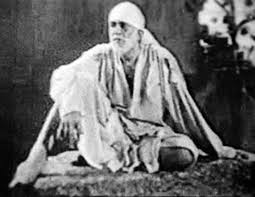
Sai Baba of Shirdi (Unknown – October 15, 1918), also known as Shirdi Sai Baba (Marathi: शिर्डीचे श्री साईबाबा, Urdu: شردی سائیں بابا), was an Indian guru, yogi, and fakir who is regarded by his Hindu and Muslim devotees as a saint. Many Hindu devotees - includingHemadpant, who wrote the famous Shri Sai Satcharitra - consider him an incarnation of Lord Krishna while other devotees consider him as an incarnation of Lord Dattatreya. Many devotees believe that he was a Satguru, an enlightened Sufi Pir, or a Qutub. No verifiable information is available regarding Sai Baba's birth and place of birth.
Sai Baba's real name is unknown. The name "Sai" was given to him upon his arrival at Shirdi, a town in the west-Indian state ofMaharashtra. Mahalsapati, a local temple priest, recognized him as a Muslim saint and greeted him with the words 'Ya Sai!', meaning 'Welcome Sai!'. Sai or Sayi is a Persian title given to Sufi saints, meaning 'poor one'. However Sāī may also refer to the Sanskrit term "Sakshat Eshwar" or the divine. The honorific "Baba" means "father; grandfather; old man; sir" in Indo-Aryan languages. Thus Sai Baba denotes "holy father", "saintly father" or "poor old man".Sai Baba remains a very popular saint,especially in India, and is worshipped by people around the world. He had no love for perishable things and his sole concern was self-realization. He taught a moral code of love, forgiveness, helping others, charity, contentment, inner peace, and devotion to God and guru. Sai Baba's teaching combined elements of Hinduism and Islam: he gave the Hindu name Dwarakamayi to the mosque he lived in, practiced Hindu and Muslim rituals, taught using words and figures that drew from both traditions, and was buried in Shirdi. One of his well known epigrams, "Sabka Malik Ek " ("One God governs all"), is associated with Islam and Sufism. He always uttered "Allah Malik"("God is King").Some of
Sai Baba's disciples became famous as spiritual figures and saints, such as Mahalsapati, a priest of the Khandoba temple in Shirdi, and Upasni Maharaj. He was revered by other saints, such as Saint Bidkar Maharaj, Saint Gangagir, Saint Janakidas Maharaj, and Sati Godavari Mataji. Sai Baba referred to several saints as 'my brothers', especially the disciples of Swami Samartha of Akkalkot.
 Historians and devotees agree that there is no reliable evidence for a particular birthplace or date of birth. Various communities have claimed that he belongs to them, but nothing has been substantiated. It is known that he spent considerable periods with fakirs, and his attire resembled that of a Muslim fakir. He did not discriminate based on religion and respected all forms of worship to God. Little has been officially documented on the early life of Shirdi Sai Baba. An account of Shirdi Sai's missing childhood years has been reconstructed by his disciple Das Ganu, after researching in the area around the village of Pathri. He collected this story in four chapters on Sai Baba, later also called the Sri Sai Gurucharitra.
Das Ganu states that Sai Baba grew up in Pathri, with a fakir and his wife. At the age of five, says Das Ganu, the fakir's wife put him in the care of the saintlydesmukh Venkusha, where the boy stayed several years. Dasganu calls the young Sai Baba the reincarnation of Kabir. Because Das Ganu was known to take poetic liberties when telling stories about Sai Baba, and as there are no other sources to corroborate this story, it usually is left out of biographies of Sai Baba of Shirdi. Sai Baba's biographer Narasimha Swamiji states that Sai Baba was born as the child of Brahmin parents: "On one momentous occasion, very late in his life, he (e.g. Sai Baba) revealed to Mahlsapathy the interesting fact that his parents were Brahmins of Patri in the Nizam's State. Patri is part of Parvani taluk, near Manwath. Sai Baba added, in explanation of the fact that he was living in a Mosque, that while still a tender child his Brahmin parents handed him over to the care of a fakir who brought him up. This is fairly indisputable testimony, as Mahlsapathy was a person of sterling character noted for his integrity, truthfulness and vairagya."
The above mentioned account is largely overlapped by the narration by Sathya Sai Baba, Sathya Sai Baba states as well that the fakir and his wife adopted the baby that was to become Sai Baba shortly after his birth.
According to the book Sai Satcharita, Sai Baba arrived at the village of Shirdi in the Ahmednagar district of Maharashtra, British India, when he was about 16 years old. He led an ascetic life, sitting motionless under a neem tree and meditating while sitting in an asana. The Shri Sai Satcharita recounts the reaction of the villagers:
The people of the village were wonder-struck to see such a young lad practicing hard penance, not minding heat or cold. By day he associated with no one, by night he was afraid of nobody.[

His presence attracted the curiosity of the villagers, and he was regularly visited by the religiously inclined, including Mahalsapati, Appa Jogle and Kashinatha. Some considered him mad and threw stones at him.Sai Baba left the village, and little is known about him after that. However, there are some indications that he met with many saints and fakirs, and worked as a weaver. He claimed to have fought with the army of Rani Lakshmibai of Jhansi during the Indian Rebellion of 1857.It is generally accepted that Sai Baba stayed in Shirdi for three years, disappeared for a year, and returned permanently around 1858, which suggests a birth year of 1838.
His philosophy ingrained 'Shraddha' meaning faith and 'Saburi' meaning compassion. According to him Shraddha and Saburi were the supreme attributes to reach the state of godliness.
It is believed that at a tender age of 16 yrs Shri Saibaba arrived at the village of Shirdi in Ahmednagar district of Maharashtra and remained their till his death. He found shelter in Khandoba temple, where a villager Mahalsapathi in the temple addressed him as Sai or Saint.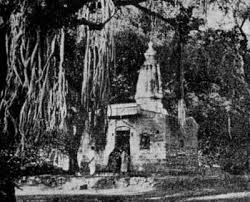
Saibaba of Shirdi lived an extremely simple and austere life, sleeping on the floor of temple and later taking a ruined mosque as his shelter. With his arrival to Shirdi, in no time he began exhibiting a hypnotic attraction among people as they began flocking to him. He is attributed many miracles doing things that were beyond a mortal's power. He never discouraged these attributes and soon his fame spread like wild fire. Many pilgrims came seeking his blessings. Such was his hypnotism that even the mundane of his activities attracted large crowds.
Popular among both Hindus and Muslims, Shri Saibaba became a great building force between the two disparate communities. He regularly recited Hindu and Muslim prayers. His Hindu followers considered him to be an avatar or reincarnation of Shiva and Dattatreya. Sai Baba did not leave any written works. All his teachings were oral and catchy. His sayings were short, crisp and in layman language with which the common mass could easily associate.
Saibaba encouraged charity and said, "Unless there is some relationship or connection, nobody goes anywhere. If any men or creatures come to you, do not discourteously drive them away, but receive them well and treat them with due respect."
Shri Sai Baba of Shirdi was unique in the sense that he lived his message through the essence of his being. He lived among the common people adorning a torn kafni (long robe), sleeping over a mat while using brick as his headrest and got his food by begging. Such was his smile that radiated a mystical charisma and deep seated inward look that hypnotized the people who visited him.
His most concise message for one and all alike was "Why fear when I am here".
Saibaba said that he was a slave in the service of those who loved him. He was ever living to help those who turn to him and that he has to take care of his children day and night.
Saibaba's mission was to restore belief in god and according to him, "I give people what they want in the hope that they will begin to want what I want to give them (knowledge of the Ultimate)." He then taught values of total surrender to the Almighty Master (ALLAH MALIK EK- The only ONE) and experiences his grace.
In 1858 Sai Baba returned to Shirdi. Around this time he adopted his famous style of dress consisting of a knee-length one-piece robe (kafni) and a cloth cap. Ramgir Bua, a devotee, testified that Sai Baba was dressed like an athlete and sported 'long hair flowing down to the end of his spine' when he arrived in Shirdi, and that he never had his head shaved. It was only after Baba forfeited a wrestling match with one Mohiddin Tamboli that he took up the kafni and cloth cap, articles of typical Sufi clothing.This attire contributed to Baba's identification as a Muslim fakir, and was a reason for initial indifference and hostility against him in a predominantly Hindu village. According to B.V. Narasimhaswami, a posthumous follower who was widely praised as Sai Baba's "apostle", this attitude was prevalent up to 1854 even among some of his devotees in Shirdi.
For four to five years Baba lived under a neem tree, and often wandered for long periods in the jungle around Shirdi. His manner was said to be withdrawn and uncommunicative as he undertook long periods of meditation. He was eventually persuaded to take up residence in an old and dilapidated mosque and lived a solitary life there, surviving by begging for alms, and receiving itinerant Hindu or Muslim visitors. In the mosque he maintained a sacred fire which is referred to as a dhuni, from which he gave sacred ashes ('Udhi') to his guests before they left. The ash was believed to have healing and apotropaic powers. He performed the function of a local hakim, and treated the sick by application of ashes. Sai Baba also delivered spiritual teachings to his visitors, recommending the reading of sacred Hindu texts along with the Qur'an. He insisted on the indispensability of the unbroken remembrance of God's name (dhikr, japa), and often expressed himself in a cryptic manner with the use of parables, symbols and allegories.
The above mentioned account is largely overlapped by the narration by Sathya Sai Baba, Sathya Sai Baba states as well that the fakir and his wife adopted the baby that was to become Sai Baba shortly after his birth.
According to the book Sai Satcharita, Sai Baba arrived at the village of Shirdi in the Ahmednagar district of Maharashtra, British India, when he was about 16 years old. He led an ascetic life, sitting motionless under a neem tree and meditating while sitting in an asana. The Shri Sai Satcharita recounts the reaction of the villagers:
The people of the village were wonder-struck to see such a young lad practicing hard penance, not minding heat or cold. By day he associated with no one, by night he was afraid of nobody.[
His presence attracted the curiosity of the villagers, and he was regularly visited by the religiously inclined, including Mahalsapati, Appa Jogle and Kashinatha. Some considered him mad and threw stones at him.Sai Baba left the village, and little is known about him after that. However, there are some indications that he met with many saints and fakirs, and worked as a weaver. He claimed to have fought with the army of Rani Lakshmibai of Jhansi during the Indian Rebellion of 1857.It is generally accepted that Sai Baba stayed in Shirdi for three years, disappeared for a year, and returned permanently around 1858, which suggests a birth year of 1838.
His philosophy ingrained 'Shraddha' meaning faith and 'Saburi' meaning compassion. According to him Shraddha and Saburi were the supreme attributes to reach the state of godliness.
It is believed that at a tender age of 16 yrs Shri Saibaba arrived at the village of Shirdi in Ahmednagar district of Maharashtra and remained their till his death. He found shelter in Khandoba temple, where a villager Mahalsapathi in the temple addressed him as Sai or Saint.
Saibaba of Shirdi lived an extremely simple and austere life, sleeping on the floor of temple and later taking a ruined mosque as his shelter. With his arrival to Shirdi, in no time he began exhibiting a hypnotic attraction among people as they began flocking to him. He is attributed many miracles doing things that were beyond a mortal's power. He never discouraged these attributes and soon his fame spread like wild fire. Many pilgrims came seeking his blessings. Such was his hypnotism that even the mundane of his activities attracted large crowds.
Popular among both Hindus and Muslims, Shri Saibaba became a great building force between the two disparate communities. He regularly recited Hindu and Muslim prayers. His Hindu followers considered him to be an avatar or reincarnation of Shiva and Dattatreya. Sai Baba did not leave any written works. All his teachings were oral and catchy. His sayings were short, crisp and in layman language with which the common mass could easily associate.
Saibaba encouraged charity and said, "Unless there is some relationship or connection, nobody goes anywhere. If any men or creatures come to you, do not discourteously drive them away, but receive them well and treat them with due respect."
Shri Sai Baba of Shirdi was unique in the sense that he lived his message through the essence of his being. He lived among the common people adorning a torn kafni (long robe), sleeping over a mat while using brick as his headrest and got his food by begging. Such was his smile that radiated a mystical charisma and deep seated inward look that hypnotized the people who visited him.
His most concise message for one and all alike was "Why fear when I am here".
Saibaba said that he was a slave in the service of those who loved him. He was ever living to help those who turn to him and that he has to take care of his children day and night.
Saibaba's mission was to restore belief in god and according to him, "I give people what they want in the hope that they will begin to want what I want to give them (knowledge of the Ultimate)." He then taught values of total surrender to the Almighty Master (ALLAH MALIK EK- The only ONE) and experiences his grace.
In 1858 Sai Baba returned to Shirdi. Around this time he adopted his famous style of dress consisting of a knee-length one-piece robe (kafni) and a cloth cap. Ramgir Bua, a devotee, testified that Sai Baba was dressed like an athlete and sported 'long hair flowing down to the end of his spine' when he arrived in Shirdi, and that he never had his head shaved. It was only after Baba forfeited a wrestling match with one Mohiddin Tamboli that he took up the kafni and cloth cap, articles of typical Sufi clothing.This attire contributed to Baba's identification as a Muslim fakir, and was a reason for initial indifference and hostility against him in a predominantly Hindu village. According to B.V. Narasimhaswami, a posthumous follower who was widely praised as Sai Baba's "apostle", this attitude was prevalent up to 1854 even among some of his devotees in Shirdi.
For four to five years Baba lived under a neem tree, and often wandered for long periods in the jungle around Shirdi. His manner was said to be withdrawn and uncommunicative as he undertook long periods of meditation. He was eventually persuaded to take up residence in an old and dilapidated mosque and lived a solitary life there, surviving by begging for alms, and receiving itinerant Hindu or Muslim visitors. In the mosque he maintained a sacred fire which is referred to as a dhuni, from which he gave sacred ashes ('Udhi') to his guests before they left. The ash was believed to have healing and apotropaic powers. He performed the function of a local hakim, and treated the sick by application of ashes. Sai Baba also delivered spiritual teachings to his visitors, recommending the reading of sacred Hindu texts along with the Qur'an. He insisted on the indispensability of the unbroken remembrance of God's name (dhikr, japa), and often expressed himself in a cryptic manner with the use of parables, symbols and allegories.
Sai Baba participated in religious festivals and was also in the habit of preparing food for his visitors, which he distributed to them as prasad. Sai Baba's entertainment was dancing and singing religious songs.
After 1910 Sai Baba's fame began to spread in Mumbai. Numerous people started visiting him, because they regarded him as a saint with the power of performing miracles, or even as an Avatar.They built his first temple at Bhivpuri, Karjat.
Sai Baba opposed all persecution based on religion or caste. He was an opponent of religious orthodoxy – Christian, Hindu and Muslim. Although Sai Baba himself led the life of an ascetic, he advised his followers to lead an ordinary family life.
Sai Baba encouraged his devotees to pray, chant God's name, and read holy scriptures. He told Muslims to study the Qur'an, and Hindus to study texts such as the Ramayana, Bhagavad Gita, and Yoga Vasistha.He was impressed by the philosophy of the Bhagavad Gita and encouraged people to follow it in their own lives. He advised his devotees and followers to lead a moral life, help others, love every living being without any discrimination, and develop two important features of character: unflinching perseverance (Shraddha) and waiting cheerfully with patience and love (Saburi). He criticized atheism.In his teachings, he emphasized the importance of performing one's duties without attachment to earthly matters, and of being content regardless of the situation.
Sai Baba emphasized the importance of performing one's duties without attachment to earthly matters, and of being content regardless of the situation. In his personal practice, Sai Baba observed worship procedures belonging to Hinduism and Islam; he shunned any kind of regular rituals but allowed the practice of namaz, chanting of Al-Fatiha, and Qur'an readings at Muslim festival times. Occasionally reciting the Al-Fatiha himself, Baba also enjoyed listening to moulu andqawwali accompanied with the tabla and sarangi twice daily.
Sai Baba interpreted the religious texts of both Islam and Hinduism. He explained the meaning of the Hindu scriptures in the spirit of Advaita Vedanta. His philosophy also had numerous elements of bhakti. The three main Hindu spiritual paths –Bhakti Yoga, Jnana Yoga, and Karma Yoga – influenced his teachings.
Sai Baba encouraged charity, and stressed the importance of sharing. He said: "Unless there is some relationship or connection, nobody goes anywhere. If any men or creatures come to you, do not discourteously drive them away, but receive them well and treat them with due respect. Shri Hari (God) will certainly be pleased if you give water to the thirsty, bread to the hungry, clothes to the naked, and your verandah to strangers for sitting and resting. If anybody wants any money from you and you are not inclined to give, do not give, but do not bark at him like a dog." Other favorite sayings of his were: "Why do you fear when I am here", and "He has no beginning... He has no end."
1. No harm shall befall him, who steps on the soil of Shirdi.
2. He who comes to my Samadhi, his sorrow and suffering shall cease.
3. Though I be no more in flesh and blood, I shall ever protect my devotees
4. Trust in me and your prayer shall be answered.
5. Know that my spirit is immortal, know this for yourself.
6. Show unto me he who has sought refuge and has been turned away.
7. In whatever faith men worship me, even so do I render to them.
8. Not in vain is my promise that I shall ever lighten your burden.
9. Knock, and the door shall open, ask and it shall be granted.
10. To him who surrenders unto me totally I shall be ever indebted.
11. Blessed is he who has become one with me.
Shri Saibaba of Shirdi lived between 1838 and 1918, whose real name, birthplace and date of birth are not known. An Indian spiritual guru and a fakir that transcended the barriers of religions, Saibaba of Shirdi was regarded with great reverence by both Hindu and Muslim followers. He lived in a mosque and after death his body was cremated in a temple.
The Shirdi Sai Baba movement began in the 19th century, while he was living in Shirdi. A local Khandoba priest - Mhalsapati Nagre - is believed to have been his first devotee. In the 19th century Sai Baba's followers were only a small group of Shirdi inhabitants and a few people from other parts of India. The movement started developing in the 20th century, with Sai Baba's message reaching the whole of India.During his life, Hindus worshipped him with Hindu rituals and Muslims considered him to be a saint. In the last years of Sai Baba's life, Christians and Zoroastrians started joining the Shirdi Sai Baba movement.
Because of Sai Baba, Shirdi has become a place of importanceand is counted among the major Hindu places of pilgrimage. The first Sai Baba temple is situated at Bhivpuri,Karjat. The Sai Baba Mandir in Shirdi is visited by around twenty thousand pilgrims a day and during religious festivals this number can reach up to a hundred thousand. Shirdi Sai Baba is especially revered and worshiped in the states of Maharashtra, Orissa, Andhra Pradesh, Karnataka, Tamil Nadu and Gujarat. In August 2012, an unidentified devotee for the first time donated two costly diamonds valuing Rs 1.18 crore at the Shirdi temple, Saibaba trust officials revealed.
The Shirdi Sai movement has spread to the Caribbean and to countries such as the United States, Australia, United Arab Emirates, Malaysia, and Singapore. The Shirdi Sai Baba movement is one of the main Hindu religious movements in English-speaking countries.
 |
| miracle of shri in homam.. |
Notable disciples
Sai Baba left behind no spiritual heirs and appointed no disciples, and did not even provide formal initiation (diksha), despite requests. Some disciples of Sai Baba achieved fame as spiritual figures, such as Upasni Maharaj of Sakori. After Sai Baba left his body, his devotees offered the daily Aarti to Upasni Maharaj when he paid a visit to Shirdi, two times within 10 years. Sai Baba had many devotees, and the most notable among them are:
Nana Saheb Chandorkar: Deputy Collector – legend has it that Sai Baba saved this man's daughter from labor complications.
Ganapath Rao Sahasrabuddhe, also known as Das Ganu: police officer who resigned to become an ascetic and singer of kirtans. He was an itinerant who spread Sai Baba's message.
Tatya Patil: had immense faith in Sai Baba and served him until Sai Baba took samadhi. Sai Baba used to treat Tatya Patil as His nephew.
Baija Mai Kote Patil: Sai Baba treated her as His elder sister and equivalent to mother. She was Tatya Patil's mother.
Haji Abdul Baba: He served Sai Baba until Sai Baba left his body in 1918.
Madhav Rao Deshpande: Later known as Shama, one of the staunch devotees of Sai Baba.
Madhav Rao Deshpande: Later known as Shama, one of the staunch devotees of Sai Baba.

Govindrao Raghunath Dabholkar (Hemadpant): Sai Baba allowed him to write the Shri Sai Satcharita.
Mahalsapati Chimanji Nagare: A priest of Khandoba Temple.
RadhaKrishna Mai: A great devotee of Baba, cleaned the temple every day and looked after Baba's needs.
108 Shirdi Sai Baba Slogans (mantras) are sung by devotees in praise of him as worship.
Sai Baba's millions of disciples and devotees believe that he performed many miracles such as bilocation, levitation, mindreading, materialization, exorcisms, making the riverYamuna, entering a state of Samādhi at will, and lightning lamps with water, removing his limbs or intestines and sticking them back to his body (khandana yoga), curing the incurably sick, appearing beaten when another was beaten, after death rising on third day like Jesus Christ, preventing a mosque from falling down on people, and helping his devotees in a miraculous way. He also gave Darshan (vision) to people in the form of Rama, Krishna, Vithoba and many other Gods depending on the faith of devotees.
The marble statue of Sai Baba of Shirdi, in the Samadhi Mandir in Shirdi, 2008
According to his followers he appeared to them in dreams even after he left his body, and gave them advice. His devotees have documented many stories.
During Sai Baba's life, the Hindu saint Anandanath of Yewala declared Sai Baba a spiritual "diamond".Another saint, Gangagir, called him a "jewel".Sri Beedkar Maharaj greatly revered Sai Baba, and in 1873, when he met him he bestowed the title Jagad guru upon him. Sai Baba was also greatly respected by Vasudevananda Saraswati (known asTembye Swami). He was also revered by a group of Shaivic yogis, to which he belonged, known as the Nath-Panchayat.
In a minor section of Islam community, Sai Baba is mainly considered as a Muslim fakir. He also appears in Sufism as a Pir. Meher Baba declared Baba to be a Qutub-e-Irshad - the highest of the five Qutubs, a "Master of the Universe" in the spiritual hierarchy.But majority of Muslims deny any special power to him. He is just another human being and that worshiping anyone other than The One God Allah is a grave sin.
Sai Baba is also worshipped by prominent Zoroastrians such as Nanabhoy Palkhivala and Homi Bhabha, and has been cited as the Zoroastrians' most popular non-Zoroastrian religious figure.
Mahalsapati Chimanji Nagare: A priest of Khandoba Temple.
RadhaKrishna Mai: A great devotee of Baba, cleaned the temple every day and looked after Baba's needs.
108 Shirdi Sai Baba Slogans (mantras) are sung by devotees in praise of him as worship.
Sai Baba's millions of disciples and devotees believe that he performed many miracles such as bilocation, levitation, mindreading, materialization, exorcisms, making the riverYamuna, entering a state of Samādhi at will, and lightning lamps with water, removing his limbs or intestines and sticking them back to his body (khandana yoga), curing the incurably sick, appearing beaten when another was beaten, after death rising on third day like Jesus Christ, preventing a mosque from falling down on people, and helping his devotees in a miraculous way. He also gave Darshan (vision) to people in the form of Rama, Krishna, Vithoba and many other Gods depending on the faith of devotees.
The marble statue of Sai Baba of Shirdi, in the Samadhi Mandir in Shirdi, 2008
According to his followers he appeared to them in dreams even after he left his body, and gave them advice. His devotees have documented many stories.
Hinduism
During Sai Baba's life, the Hindu saint Anandanath of Yewala declared Sai Baba a spiritual "diamond".Another saint, Gangagir, called him a "jewel".Sri Beedkar Maharaj greatly revered Sai Baba, and in 1873, when he met him he bestowed the title Jagad guru upon him. Sai Baba was also greatly respected by Vasudevananda Saraswati (known asTembye Swami). He was also revered by a group of Shaivic yogis, to which he belonged, known as the Nath-Panchayat.
Islam
In a minor section of Islam community, Sai Baba is mainly considered as a Muslim fakir. He also appears in Sufism as a Pir. Meher Baba declared Baba to be a Qutub-e-Irshad - the highest of the five Qutubs, a "Master of the Universe" in the spiritual hierarchy.But majority of Muslims deny any special power to him. He is just another human being and that worshiping anyone other than The One God Allah is a grave sin.
Zoroastrianism
Sai Baba is also worshipped by prominent Zoroastrians such as Nanabhoy Palkhivala and Homi Bhabha, and has been cited as the Zoroastrians' most popular non-Zoroastrian religious figure.
Others
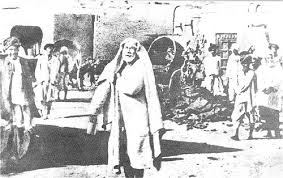
Meher Baba, who was born into a Zoroastrian family, met Sai Baba only once in his lifetime, during World War I, in December 1915. Meher Baba was still a youngster named Merwan Sheriar Irani when he met Sai Baba for a few minutes during one of Sai Baba's processions in Shirdi. This event is considered as the most significant in Meher Baba's life. Shri Sai Satcharita (Sai Baba's life story), makes no mention of Meher Baba. But in Lord Meher, the life story of Meher Baba, there are innumerable references to Sai Baba. Meher Baba credited his Avataric advent to Upasni, Sai Baba, and three other Perfect Masters – Hazrat Babajan, Hazrat Tajuddin Baba, and Narayan Maharaj.
In 1940, Indian guru, Sathya Sai Baba proclaimed himself to be the reincarnation of Sai Baba of Shirdi.Sathya Sai Baba had a considerable number of followers in the 20th and 21st century.
Today, Shri Saibaba has millions of devotees in India and abroad. Shirdi, the obscure village in Maharashtra has become a pilgrimage destination much as Bethlehem, Jerusalem or Varanasi. With over 25,000 pilgrims thronging in here each day the number of pilgrims climb to over a hundred thousand on holidays and festival days. There are over 2,000 major Sai temples in different parts of India and 150 abroad in places as far-flung as Canada and Kenya, Singapore and England.
 Life of Shri
The birth and the early life of Shri Saibaba are not much known. From the year 1858, Baba lived in the village of Shirdi in the state of Maharashtra for over sixty years. Baba came to Shirdi in 1858 accompanying a wedding procession as guest of honor. He was greeted my Mahalsapathi "Ya - Sai"(Welcome Sai). Baba accepted that name to be eternally his and spent his early days at Shirdi, under a neem tree and later lived in the masjid which he named as Dwarkamai or Mother Dwarka (Dwarka is the holy city associated with Lord Krishna).......
Chand Patil was once riding through the forest when suddenly he felt an acute urge to smoke. To his great dismay, however, he found that he did not have the wherewithal to ignite a fire to light his chelum with. Seeing Sai Baba seated under a tree, the rider approached him for a match. Baba had no matches, but just by thrusting the tongs nearly, he produced flames. The rider witnessing the miracle, realizes Baba's divine stature and kneels to him in devotion ......
Here is an instance of a devotee's burning love for the master. Baijabai daily sought out Baba in the forest where he lived in the early days, in order to bring him food, which she lovingly prepared for him. Baba raises his hand in a gesture of blessing......
Service is the badge of God's kingdom. Radha Krishna Mai voluntarily assumed the duty of sweeping the ashram compound daily. This was her way of showing her adoration for the Master......

Saibaba was the common man's God. He lived with them; he slept and ate with them. He had no pretensions of any kind. Baba used to feed the fakirs and devotees and even cook for them. The food that Baba made seemed to grow in abundance and there was always enough for everyone. The touch of a Sat-Purusha unlocks the storehouse of the Goddess Annapoorna's unlimited resources....
 Saibaba was very fond of children. He used to spend part of his day in playing, chit-chatting or humoring with the children of the village.....
 Saibaba used to sit on the steps of the Dwarkamayee at Shirdi, absorbed in the divine bliss of music. Saibaba's appreciation of talent, and the warm encouragement He gave to those who had talent were priceless gifts from the Master.......

Saibaba in the company of devotees and fakirs used to dance and sing in divine bliss, with small tinklets tied around his ankles. Songs he song were mostly in Persian or Arabic or sometimes some popular songs of Kabir.......

Saibaba had a profound love and compassion for suffering humanity. The master used to personally attend to the needs of the sick as a physician and a nurse.......

Saibaba's knowledge of the Shastras, the Geeta, the Quran and other scriptures was phenomenal. Without studying or reading books, Baba possessed a rare proficiency in all the scriptures, and he could quote a verse or a line from these books and scriptures to show where a particular truth lay embedded........

Saibaba distributed the holy 'Udi' - the panacea for all troubles - to his bhaktas. 'Udi' is the ash from the perpetual sacred fire - Dhuni - lit by Baba a hundred years ago. The Udi is the token of his divine grace to all who come to him for help......

Saibaba ploughed up the village common land and raised a flower garden thereon; he watered the plants, carrying pots full of water on his shoulders. In the later years he spent a few hours in this Lendi garden, which he himself had laid out in the early days.......

He begged for alms and shared what he got with his devotees and all the creatures around him. He never kept any food in reserve for the next meal. At times Baba would scold a grudging housewife by saying- "Mother, you have so many chapaties, so much rice and this or that vegetable in your pots, why refuse a bit of food to a Fakir?". The gentle prodding and the accuracy of the strange fakir's pronouncements would remove the veil of maya from these women who would then rush to put all with them at his feet, as an offering of Love.......

Laxmibai Shinde used to offer Saibaba bread and milk every day with love and devotion. Baba accepted and took the offering she made. She was so special to Saibaba that just before his passing away, Saibaba gave her Rs.5/- and Rs.4/- in all Rs.9/-. The figure 9 is special and is indicative of the nine types of devotion viz., (1) Shravana (Hearing); (2) Kirtana (Praying); (3) Smarana (Remembering); (4) Padasevana (resorting to the feet); (5) Archana (Worship); (6) Namaskara (Bowing); (7) Dasya (Service); (8) Sakhyatva (Friendship); (9) Atmanivedana (surrender of the self).


The 15th October 1918 was a sorrowful day for the little village of Shirdi, for in the heavy hours of the noon, the beloved master suddenly breathed his last. Quietly and unobrusively, Baba gave up his body and let his head fall gently on the shoulders of a near disciple. Though Saibaba might have left his mortal coil, he still is alive for his devotees. He is a Living God. Even today, though he has left his gross body, we feel his presence and obtain his grace and protection every day.......

Here is an instance of a devotee's burning love for the master. Baijabai daily sought out Baba in the forest where he lived in the early days, in order to bring him food, which she lovingly prepared for him. Baba raises his hand in a gesture of blessing......
Service is the badge of God's kingdom. Radha Krishna Mai voluntarily assumed the duty of sweeping the ashram compound daily. This was her way of showing her adoration for the Master......
Saibaba was the common man's God. He lived with them; he slept and ate with them. He had no pretensions of any kind. Baba used to feed the fakirs and devotees and even cook for them. The food that Baba made seemed to grow in abundance and there was always enough for everyone. The touch of a Sat-Purusha unlocks the storehouse of the Goddess Annapoorna's unlimited resources....
Saibaba was very fond of children. He used to spend part of his day in playing, chit-chatting or humoring with the children of the village..... Saibaba used to sit on the steps of the Dwarkamayee at Shirdi, absorbed in the divine bliss of music. Saibaba's appreciation of talent, and the warm encouragement He gave to those who had talent were priceless gifts from the Master....... Saibaba in the company of devotees and fakirs used to dance and sing in divine bliss, with small tinklets tied around his ankles. Songs he song were mostly in Persian or Arabic or sometimes some popular songs of Kabir.......
Saibaba had a profound love and compassion for suffering humanity. The master used to personally attend to the needs of the sick as a physician and a nurse.......
Saibaba's knowledge of the Shastras, the Geeta, the Quran and other scriptures was phenomenal. Without studying or reading books, Baba possessed a rare proficiency in all the scriptures, and he could quote a verse or a line from these books and scriptures to show where a particular truth lay embedded........
Saibaba distributed the holy 'Udi' - the panacea for all troubles - to his bhaktas. 'Udi' is the ash from the perpetual sacred fire - Dhuni - lit by Baba a hundred years ago. The Udi is the token of his divine grace to all who come to him for help......
Saibaba ploughed up the village common land and raised a flower garden thereon; he watered the plants, carrying pots full of water on his shoulders. In the later years he spent a few hours in this Lendi garden, which he himself had laid out in the early days.......
He begged for alms and shared what he got with his devotees and all the creatures around him. He never kept any food in reserve for the next meal. At times Baba would scold a grudging housewife by saying- "Mother, you have so many chapaties, so much rice and this or that vegetable in your pots, why refuse a bit of food to a Fakir?". The gentle prodding and the accuracy of the strange fakir's pronouncements would remove the veil of maya from these women who would then rush to put all with them at his feet, as an offering of Love.......
Laxmibai Shinde used to offer Saibaba bread and milk every day with love and devotion. Baba accepted and took the offering she made. She was so special to Saibaba that just before his passing away, Saibaba gave her Rs.5/- and Rs.4/- in all Rs.9/-. The figure 9 is special and is indicative of the nine types of devotion viz., (1) Shravana (Hearing); (2) Kirtana (Praying); (3) Smarana (Remembering); (4) Padasevana (resorting to the feet); (5) Archana (Worship); (6) Namaskara (Bowing); (7) Dasya (Service); (8) Sakhyatva (Friendship); (9) Atmanivedana (surrender of the self).

The 15th October 1918 was a sorrowful day for the little village of Shirdi, for in the heavy hours of the noon, the beloved master suddenly breathed his last. Quietly and unobrusively, Baba gave up his body and let his head fall gently on the shoulders of a near disciple. Though Saibaba might have left his mortal coil, he still is alive for his devotees. He is a Living God. Even today, though he has left his gross body, we feel his presence and obtain his grace and protection every day.......


|